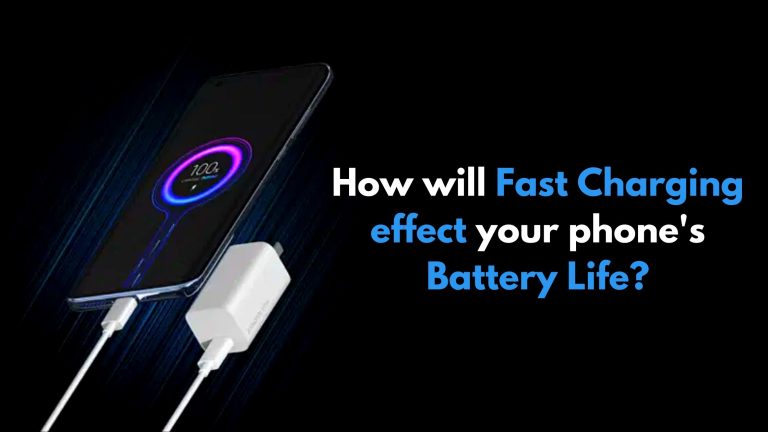
In today’s fast-paced world, smartphones have become an indispensable part of our lives. From staying connected to accessing information, our reliance on these devices is constantly increasing. With this growing dependence comes the necessity for quick charging solutions to keep up with our busy schedules. Fast charging has become a boon for many, offering the promise of a fully charged device in a matter of minutes. However, it’s essential to consider the trade-offs associated with this convenience, especially when it comes to your battery’s long-term health.
The Fast Charging Revolution
Fast-charging technology has undoubtedly transformed the way we use our smartphones. Traditional charging methods would often leave us tethered to a power outlet for hours, but with fast charging, we can top up our devices quickly and get back to our activities. Manufacturers have embraced this trend, offering various proprietary fast-charging technologies with catchy names like “Quick Charge,” “Dash Charge,” and “SuperVOOC.”
The Battery Conundrum
At the heart of the fast charging debate lies the battery – a vital component that determines a smartphone’s performance and longevity. Most modern smartphones use lithium-ion or lithium-polymer batteries, both of which are sensitive to factors like temperature, charging rate, and depth of discharge. Fast charging pushes more energy into the battery at a higher rate, generating more heat in the process. This combination of increased energy and heat can have detrimental effects on the battery’s capacity over time.
Degradation on the Fast Track
Battery degradation is an inevitable process that occurs with every charge cycle. A charge cycle refers to the process of using a certain amount of the battery’s capacity, regardless of whether it’s a full charge or a partial one. A typical smartphone battery is designed to withstand around 300 to 500 charge cycles before its capacity starts to diminish noticeably. Fast charging accelerates this process due to the increased stress placed on the battery.
When a battery is fast charged, it generates more heat than during regular charging. Elevated temperatures can cause the battery’s chemical components to break down more quickly, leading to irreversible damage. Over time, this damage accumulates, resulting in reduced battery capacity. A battery that once held a full day’s charge might now struggle to last even half that time.
The Slow Charging Advantage
Comparatively, slow charging puts less stress on the battery. When you charge your device slowly, there is less heat generated, and the battery’s chemical reactions occur at a more controlled pace. This gentle approach helps mitigate the risk of rapid capacity loss due to thermal stress and chemical wear and tear.
Striking a Balance
While the allure of fast charging is undeniable, it’s crucial to strike a balance between convenience and long-term battery health. Manufacturers are aware of the challenges posed by fast charging, and they have implemented various mechanisms to safeguard battery health, such as adaptive charging algorithms and temperature monitoring.
To maximize your phone’s battery life, consider the following tips:
Use Fast Charging Sparingly: Reserve fast charging for when you truly need it, such as during emergencies or when you’re in a rush.
Opt for Slow Charging Overnight: Charging your phone slowly overnight can help maintain the battery’s health without compromising your daily routine.
Avoid High Temperatures: Heat is the enemy of battery life. Keep your phone in a cool environment while charging, and avoid using it excessively during charging sessions.
Use Official Accessories: Stick to official chargers and cables provided by the manufacturer, as they are designed to work optimally with your device’s battery.
Conclusion
Fast charging has undoubtedly revolutionized the way we power our smartphones, but it comes with a cost. The trade-off between speed and battery longevity is a delicate one. While fast charging is a convenient solution for our hectic lives, understanding its impact on battery health is crucial to ensuring your device’s long-term performance. Striking a balance between fast and slow charging, while also taking measures to manage temperature, can help you prolong your phone’s battery life and overall usability.
Do you need a Battery Replacement?
Free Installation
15 Minutes Turnaround
Industry Leading Warranty
Located in Kingston, JA
Mail-In Service available (additional shipping charges may apply)
Please contact us today, if you would like to schedule an appointment or have any questions.
As Jamaica prepares for another Atlantic hurricane season, local telecom providers are placing greater focus on network resilience, backup systems, and disaster recovery.
According to a recent Jamaica Observer report, Flow Jamaica says it has strengthened its disaster preparedness after Hurricane Melissa, including the use of satellite-backed connectivity through its partnership with Starlink.
Flow Jamaica Vice-President and General Manager Stephen Price said the company now has direct-to-cell capabilities, and that about 40% of Flow’s mobile network is supported by satellite because of its Starlink partnership.
This is an important development for Jamaica, especially during hurricane season, when fibre lines, cell towers, and power infrastructure can be damaged by high winds, flooding, and storm surge.
Satellite-backed connectivity can help telecom providers keep parts of their network online when traditional infrastructure is affected. For businesses, this also highlights the importance of having backup internet options, disaster recovery plans, and alternative communication methods in place before a storm arrives.
While recent international news showed Digicel PNG becoming authorized to resell Starlink services in Papua New Guinea, there is currently no confirmed report that Digicel Jamaica is selling Starlink locally.
For Jamaica, the more relevant development is Flow’s use of Starlink-supported satellite connectivity as part of its network resilience and disaster recovery strategy.
As severe weather events become more disruptive, businesses should review their own backup plans, including internet redundancy, power backup, cloud storage, and emergency communication options.
At Prizmatic Technology, we continue to monitor technology developments that may affect local businesses, connectivity, and disaster preparedness.
Why Non-Certified USB-C Cables Can Destroy Your iPhone’s Charging Circuit
Not all USB-C cables are created equal. Here’s what’s really inside that cheap cable — and why it matters for your Apple device.
Since Apple transitioned the iPhone 15, iPhone 16, and recent iPad models to USB-C, many customers assume any Type-C cable will do the job. After all, a cable is a cable — right?
Wrong. At Prismatic Technology, we’ve seen a dramatic increase in iPhones and iPads arriving with damaged charging circuits, swollen batteries, and burned-out USB-C ports. The common thread? Cheap, non-certified USB-C cables purchased from gas stations, discount stores, or no-name online sellers.
This article explains exactly what’s different inside a certified versus non-certified USB-C cable, how that difference can permanently damage your Apple device, and what to look for when buying a cable.
What Makes USB-C Different
USB-C is far more complex than the old Lightning connector or USB-A plugs you may be used to. A full-featured USB-C connector has 24 pins arranged in a symmetrical 12-by-2 layout. These pins are divided into groups, each responsible for a critical function:
VBUS & GND (Power pins) — Deliver charging current to your device, supporting up to 100W with Power Delivery.
CC1 & CC2 (Configuration Channel) — Negotiate charging speed, detect cable orientation, and communicate the cable’s power rating to your device.
D+ & D– (USB 2.0 data) — Handle basic data transfer at 480 Mbps.
TX/RX pairs (SuperSpeed data) — Enable high-speed data transfer up to 40 Gbps on full-featured cables.
SBU (Sideband Use) — Support video output and alternate modes like DisplayPort.
These 24 pins work together as a system. The CC pins, in particular, are critical — they’re the “handshake” pins that tell your iPhone how much power it can safely draw. Without proper CC pin functionality, your device is essentially flying blind.
A full USB-C connector uses 24 pins across two rows. Cheap cables often wire only 4–7 of these pins.
What’s Inside a Cheap, Non-Certified Cable
When tech research company Lumafield used X-ray CT scanners to compare a budget USB-C cable against Apple’s Thunderbolt cable, the results were striking. The cheap cable had no internal shielding, no circuit board, and only 4 active pins out of 8 available — just bare wires soldered directly to the connector pins and held in place by plastic.
Apple’s cable, by contrast, contained a stainless steel enclosure, a 10-layer circuit board assembly, all 24 pins individually wired, coaxial shielding around 10 of those wires, and a strain-relief fitting crimped from eight directions.
Here’s what cheap cables commonly lack:
Component
Certified Cable
Cheap Cable
CC pins (power negotiation)
✓ Present & active
✗ Missing or wrong resistor
Extra VBUS/GND pins
✓ Redundant power paths
✗ Minimal wiring
e-Marker chip
✓ Reports cable rating
✗ Missing entirely
Internal shielding
✓ Coaxial shielding
✗ No shielding
PCB assembly
✓ Multi-layer PCBA
✗ Bare wire soldering
Overcurrent protection
✓ Fuse circuit
✗ No protection
X-ray scans reveal vastly different internal structures across USB-C cables. Image credit: Lumafield
How a Bad Cable Damages Your iPhone’s Charging Circuit
The damage isn’t just theoretical. Here’s exactly what goes wrong:
1. Failed Power Delivery Negotiation
When the CC pins are missing or use incorrect pull-up resistors, the cable cannot properly negotiate a safe charging voltage with your iPhone. The device may default to drawing too much current, or worse, the charger may push voltage that the phone’s power management IC isn’t expecting. This can overstress and burn out the charging IC on the logic board — a repair that often costs more than the phone is worth.
2. Voltage Spikes and No Surge Protection
Certified cables contain a fuse-like chip that isolates damage in the event of a power fluctuation. If a surge occurs, the cable absorbs the hit — not your phone. Non-certified cables have no such protection. A voltage spike from a wall outlet travels straight through the cable and into your device’s charging circuit.
3. Overheating from Inadequate Wiring
When a cable skips the extra ground and power pins, all the current flows through fewer, thinner wires. This creates excessive heat at the connector and inside the cable. Over time, this heat damages the USB-C port on your device, warps internal contacts, and can cause battery swelling.
4. Short Circuits from Poor Construction
Without internal shielding, the bare wires inside cheap cables can shift, touch, and create short circuits. This can instantly damage the charging IC, Tristar/Hydra chip (Apple’s proprietary USB controller), or the battery management system.
⚡ Real Cases We’ve Seen at Prismatic Technology:
Customers have brought us devices with burned charging ports, logic boards with blown charging ICs, and swollen batteries — all traced back to using gas-station or flea-market USB-C cables. In some cases, the damage was so severe that it required a full board-level repair or the device was beyond economical repair entirely.
Signs Your Cable May Be Damaging Your Device
If you’re using a non-certified cable, watch for these warning signs:
Phone charges very slowly or intermittently
Cable or phone gets unusually hot during charging
“Accessory Not Supported” or “Accessory May Not Be Supported” warnings
Phone shows charging icon but battery percentage doesn’t increase
Charging only works at certain angles
Rapid, unexplained battery health decline
Burning smell from the charging port area
If you notice any of these symptoms, stop using that cable immediately and have your device inspected.
How to Choose a Safe USB-C Cable
🚫 Avoid
No brand name on cable or packaging
Missing MFi or USB-IF certification logo
Priced under $3–5 USD
Sold at gas stations, dollar stores, or flea markets
Flimsy connector housing, loose fit
No product safety certifications (UL, ETL)
✅ Look For
Apple-branded or MFi certified label
Reputable brands: Belkin, Anker, Mophie, Ugreen
USB-IF certification mark
UL or ETL safety certification
Solid connector housing with strain relief
Clearly stated power and data ratings
💡 What is MFi Certification?
MFi stands for “Made for iPhone/iPad/iPod.” It means the accessory has been tested and certified by Apple to meet their performance and safety standards. MFi-certified cables contain proprietary components that monitor amperage flow and protect against power surges. Third-party manufacturers like Belkin, Anker, and Mophie all make MFi-certified cables — you don’t have to buy directly from Apple, but you do need to buy certified.
✅ Quick Check: You can verify if a cable is MFi certified by visiting Apple’s official database at mfi.apple.com/MFiWeb/getAPS and searching for the manufacturer and model number.
The Bottom Line
Your iPhone, iPad, or MacBook with USB-C contains sophisticated power management circuitry that relies on the cable to communicate safely with the charger. A non-certified cable that lacks proper CC pin wiring, e-Marker chips, and overcurrent protection bypasses every safety mechanism Apple built into your device.
A $500 cable can cause $45,000–$65,000 in charging circuit damage. It’s simply not worth the risk.
Invest in a certified cable from a reputable manufacturer. Your device — and your wallet — will thank you.
Already Experiencing Charging Issues?
If your iPhone, iPad, or MacBook isn’t charging properly, our certified micro-soldering engineers can diagnose and repair charging circuit damage at the board level with our industry leading lifetime warranty, saving you from a costly device replacement.
Sign in: If you have a Microsoft account, sign in using your email address and password. If you don’t have a Microsoft account, you can create one by clicking on the “Create one!” link.
Enter the product key: Once you have signed in, you’ll be prompted to enter your 25-digit product key. If you have a physical copy of Microsoft Office, the product key is usually located on the card inside the package. If you purchased Microsoft Office online, you should have received an email with the product key.
Verify the product key: After entering the product key, click on the “Redeem” button. The website will verify the product key and check if it’s eligible for redemption.
Download and install Office: If the product key is valid, you’ll be taken to the download page where you can choose the version of Office you want to install. Click on the “Download” button to download the installer. Once the download is complete, double-click on the installer to start the installation process.
Activate Office: Once you’ve installed Office, you’ll need to activate it by signing in with your Microsoft account. Enter your email address and password and follow the on-screen instructions to complete the activation process.
That’s it! You should now have a fully functional copy of Microsoft Office on your device. If you have any problems with the redemption process, you can contact Microsoft support for assistance.
Do you need a Microsft Office Key?
Please contact us today, if you would like to schedule an appointment or have any questions.
OLED (Organic Light Emitting Diode) and LCD (Liquid Crystal Display) are two common display technologies used in electronic devices such as smartphones, televisions, and laptops. While both technologies are used to display images, there are significant differences between OLED and LCD displays.
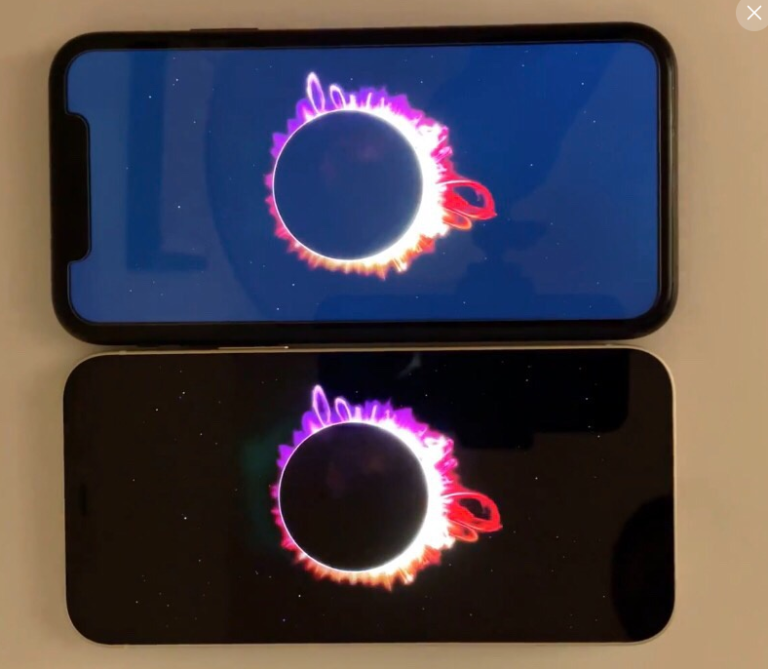
LCD displays work by using a backlight to illuminate liquid crystals, which then control the amount of light that passes through the display to produce an image. This means that in an LCD display, the backlight is always on, even in areas of the display that are supposed to be black. This results in a less vivid and less contrast-rich image compared to OLED displays.
On the other hand, OLED displays do not use a backlight and instead each individual pixel generates its own light. This allows for more control over the amount of light emitted by each pixel, resulting in better contrast and deeper blacks. In an OLED display, pixels can be turned off completely to produce a true black, which is not possible with an LCD display.
Another difference between OLED and LCD displays is their response time, or the time it takes for a pixel to change from one color to another. OLED displays have a faster response time than LCD displays, which results in smoother and clearer motion in fast-moving images.
In terms of durability, OLED displays are generally more durable and flexible than LCD displays. OLED displays are made of organic materials that are more resistant to damage and can bend without breaking, making them a popular choice for curved or foldable displays.
Finally, the production process of OLED displays is generally more expensive than that of LCD displays, which makes OLED-equipped devices more expensive. However, as the technology improves and becomes more widely used, the cost is likely to decrease.
In conclusion, while both OLED and LCD displays have their strengths and weaknesses, OLED displays offer better contrast, faster response times, and increased durability compared to LCD displays. Whether you choose an OLED or an LCD display will depend on your individual needs and preferences, as well as your budget.
Do you need an LCD Replacement?
Free Installation
15 Minutes Turnaround
Industry Leading Warranty
Located in Kingston, JA
Mail-In Service available (additional shipping charges may apply)
Please contact us today, if you would like to schedule an appointment or have any questions.
You’re working diligently on your laptop when it suddenly begins to feel hot, run slowly, and possibly even stop entirely. Could your laptop be experiencing overheating? It’s a situation that many of us have been through.
It is increasingly important to keep your laptop running at its best and protect it from damage, as many of us are working and learning from home. Running a poorly maintained laptop can cause it to overheat and run slowly and in some cases, you may experience long-term damage.
At Prismatic Technology, our team of professionals assists many customers in exploiting their tech to the fullest potential. We understand the importance of quickly diagnosing any issues with your device and resolving them as swiftly as possible.
Why is my laptop overheating?
Laptops are much more compact than desktop computers and have limited space for all the components. This means when you are trying to do tasks that require a lot of processing power, such as streaming videos or playing video games, the temperature of your laptop can increase significantly. Internal fans will work to cool the device, but it can still get too hot, performance is limited in order to prevent heat accumulation and facilitate cooling, this is called thermal throttling, an overheating device will do this in order to protect itself from burning up, the result of which means degraded performance.
Here are a few other reasons why a laptop might overheat:
The air vents are covered. This can happen when you place your laptop on a soft or uneven surface, like a bed, pillow, or lap, that reduces airflow.
Dust, dirt, hair, and grime can hinder your laptop’s fan, causing it to struggle to cool the device down.
There are problems with internal hardware, such as an old battery or decaying thermal paste, a substance that helps the processor to efficiently transfer heat to the heat sink or water block of the CPU cooler thus preventing your computer from overheating.
How do I know if my laptop is overheating?
According to Hampshire College, the temperature of a laptop should not exceed 95 degrees Fahrenheit. take steps to keep your device running smoothly and efficiently as possible.
Signs of overheating include the following:
Longer-than-usual wait times for basic tasks.
Programs or applications freezing.
Unresponsiveness of laptop accessories such as a mouse or keyboard.
Unexpected shutdowns with a delayed reboot.
Error messages warning of overheating.
Why is my laptop fan so loud?
A loud laptop fan can indicate that your computer is being pushed to its limits as it attempts to regulate its temperature. The underlying cause could be from a variety of sources – such as an accumulation of dust particles within the fan, air vents blocked by items placed on top of the laptop (like your lap or a soft surface, such as a bed), or too much usage of high-intensity applications (like video games or video editing software).
A laptop breakdown can be a major obstacle to productivity. With a Prismatic+ protection plan, you can keep your downtime to a minimum. This comprehensive coverage plan offers protection for thousands of eligible devices in your home, including iPhones, tablets, consoles, and more. Plus, it provides 24/7 support from experienced tech experts for any tech-related questions. To learn more about laptop protection plans give us a call or visit prizmatictech.com.
Summary
In summary, laptops can overheat due to inadequate cooling, dust and dirt buildup, or hardware problems. Symptoms of overheating include slow performance, freezing programs and applications, and unexpected shutdowns. A loud laptop fan can indicate the device is being pushed to its limits and the cause may be dust buildup, blocked air vents, or too much usage of high-intensity applications. To avoid these issues and ensure your laptop is running optimally, it is important to keep your device clean and properly maintained. Prismatic+ offers comprehensive protection plans to help you keep your device running smoothly.
Do you need this service done?
Industry Leading Warranty
Same day Turnaround
Located in Kingston, JA
Mail-In Service available (additional shipping charges may apply)
B2B pricing available for repair shops
Please contact us today, if you would like to schedule an appointment or have any questions.
The modem firmware number is shown in “About” means that the baseband is present, if no modem firmware is shown in “about” it means there is no baseband, insert SIM card and then access dial-up interface to input * # 06 # directly, under normal circumstances, IMEI serial number will be shown same as what you can find in “about” interface.
In this iPhone, no IMEI serial number is shown when dialing * # 06 #, since we’ve already found out that there is a baseband in this phone, in this case, no need to consider if it’s caused by the baseband, mostly the problem is caused by the RFF bus which is a part of the baseband circuit.
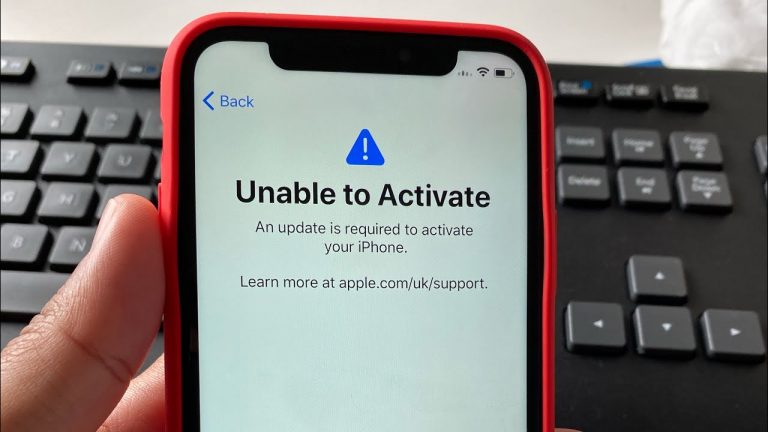
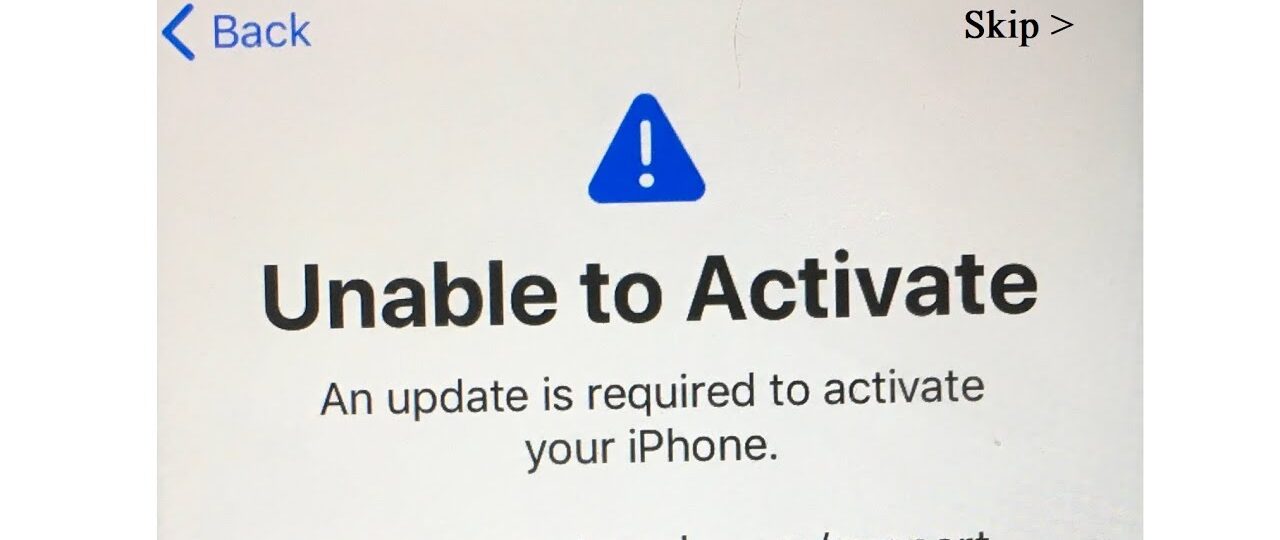
if your phone is stuck at the activation screen select the “i” at the lower right of the screen, if there is no IMEI number this means that there is no baseband circuit, this can be the result of a fall, water damage, or technician damage if your phone is an iPhone 7 or 7+ a had the audio ic repair attempted by someone less experienced.
If your device is an iPhone 7, Apple has said that a small number of iPhone 7 models may experience this issue because of a hardware problem. Apple explains the problem here in more detail. Model numbers A1660, A1780, and A1779 may experience this issue (please note that you may find the model number on the back of your device). If you think that your device is also affected, then simply contact us.
A metered connection is an Internet connection that has a data limit associated with it, if your using your phone as a personal hot-spot and you do not have an unlimited data plan then you should set your computer to metered connection. Cellular data connections are set as metered by default. Wi-Fi and Ethernet network connections can be set to metered but aren’t by default. Some apps might work differently on a metered connection to help reduce your data usage. Also, some updates for Windows won’t be installed automatically.
To set a Wi-Fi network connection as metered:
Select Start > Settings > Network & Internet > Wi-Fi > Manage known networks.
Select the Wi-Fi network > Properties > turn on Set as metered connection.